Xiu
VS
2 匹の熊がページを読み込んでいます…
XiuZon AI レビューコミュニティ · 2 匹の熊が対決中
2 匹の熊がページを読み込んでいます…
XiuZon AI レビューコミュニティ · 2 匹の熊が対決中
Creates a realistic 15-shot vertical portrait film with natural window light, subtle expressions, and clean hard cuts while accurately preserving the reference person’s identity.
Duration: 15 seconds. Aspect ratio: 9:16 vertical.

SUBJECT / REFERENCE: @Image 1 is the sole identity reference. Accurately preserve the reference person’s facial features, bone structure, skin tone, and individually recognizable traits. Show exactly the person who is uploaded; do not redesign their appearance or replace it with a standardized template face. Every shot must feature the same person.

OVERALL STYLE: A live-action portrait film with authentic photographic texture. Focus on the face, gaze, microexpressions, and natural poses, using clean compositions and crisp editing. Each shot should feel like a portrait photograph that is gently breathing, with genuine human micromovements rather than a zoom applied to a still image. Use low-saturation film color while preserving natural skin tone, skin texture, and small highlights. Avoid heavy beauty retouching and plastic-looking skin.

ENVIRONMENT: A simple interior with a matte gray-green wall. Natural daylight from a side window creates a clear but restrained projection of the window frame on the wall. Some shots use soft side lighting; others place a narrow strip of window light across the brows, eyes, bridge of the nose, and cheek. Do not include conspicuous decorations, text, or other people.

LIGHTING: Slightly warm natural daylight, with soft gray-green ambient color retained in the shadows. Give the face dimensional light and shade and preserve natural catchlights in the eyes. Do not blow out local highlights or crush the shadows; retain realistic skin detail. Changes in light must result from the shooting position and subtle turns of the person’s head, not from an automatically sweeping stage beam. Keep skin tone and color treatment consistent throughout.

CAMERA: Vertical 9:16 portrait framing. Alternate among medium shots above the waist, bust shots, close profile shots, and extreme facial close-ups. Use normal perspective for half-body shots and natural telephoto portrait perspective for close-ups; do not place a wide-angle lens close to the face. Keep most shots stable with only an extremely subtle sense of camera breathing. The final shot may move in very slowly; do not use obvious pushes, pulls, orbits, or pans in the other shots.

EDITING: 15 shots with 14 direct hard cuts. Cut at 0.83, 1.75, 2.67, 3.58, 4.25, 4.75, 5.42, 6.29, 7.21, 8.17, 9.00, 10.29, 11.88, and 12.88 seconds. Each hard cut enters another portrait fragment of the same person, changing shot size, angle, pose, or lighting. The person does not need to complete continuous blocking between shots. Do not use dissolves, white flashes, whip pans, rotating transitions, or magical effects. Keep the early editing rhythm tight and allow the final shot more breathing room.

PERFORMANCE: At the beginning of every short shot, the person is already in the specified pose. Each shot contains only one small change; do not make the person rebuild an entire pose within a single second. The gaze must have a real point of focus, blinking must be natural, and breathing should be subtly visible. A smile should emerge gradually through the eyes and corners of the mouth, not switch abruptly into an exaggerated grin. Do not smile in every shot, blink in every shot, or keep the head continuously tilted. The lips may part naturally, but the person must not speak, sing, or mouth dialogue.

0.00–0.83 seconds | Extreme facial close-up: Frame tightly around the face, allowing parts of the forehead and chin to fall naturally outside the frame while keeping the eyes, bridge of the nose, and corners of the mouth clear. The head is slightly tilted and the person looks into the camera. The relaxed corners of the mouth slowly rise into a very faint smile. Window light reveals real skin texture. Do not move the camera around to search for facial features.

0.83–1.75 seconds | Frontal half-body shot: Hard cut. The upper body leans slightly forward, the shoulders are relaxed, and both arms hang naturally downward. The person looks directly into the camera with a calm expression, showing only breathing and a minimal gaze adjustment. A bright patch of window light and the shadow of the window frame are visible on the background wall. Show the head and shoulders fully and comfortably within the vertical frame.

1.75–2.67 seconds | Bust portrait in window light: Hard cut. In a close shot above the chest, a narrow strip of window light falls diagonally around the forehead, bridge of the nose, and lips. The shoulders remain stable, the chin lifts only slightly, and the person looks calmly at the camera. The rest of the face remains in soft shadow with a clear facial contour. Do not turn the tiny chin lift into a pronounced backward tilt.

2.67–3.58 seconds | Lateral facial detail: Hard cut. An extreme close-up emphasizes the cheek, tip of the nose, and lips, with the eyes near the upper edge of the frame. The person looks off-camera, naturally parts the lips, and then gently relaxes them. Retain subtle breathing; do not speak or make a large head turn. Use natural shallow depth of field without letting the entire face become unfocused.

3.58–4.25 seconds | Hand on opposite shoulder: Hard cut. In a medium shot above the waist, the body is angled slightly sideways and one hand is already resting lightly on the opposite shoulder. The fingers are naturally spread, the head inclines slightly to one side, the neck is elongated, and the gaze meets the camera. Let the shoulder move only subtly with breathing; do not repeat the hand-raising action. The palm must make real contact with the shoulder without floating or intersecting it.

4.25–4.75 seconds | Layered hands beneath the chin: Hard cut. In a frontal bust shot, the fingers of both hands are lightly overlapped and placed horizontally beneath the chin, with naturally curved wrists. The person looks into the camera and gently deepens the existing faint smile. Keep the finger anatomy clear and separate; do not fuse the fingers or cover the mouth and nose with the palms.

4.75–5.42 seconds | Extreme eye close-up: Hard cut. Frame one eye, the eyebrow, the edge of the nose bridge, and part of the cheek. Clearly render the iris, eyelashes, skin around the eye, and soft catchlight. The person blinks naturally once and maintains a stable gaze after reopening the eye. Do not add tears or enlarge the eye unnaturally.

5.42–6.29 seconds | Resting sideways on the arms: Hard cut. Both arms are already crossed and raised, and the head rests gently sideways on the forearm. The eyes begin softly closed, then slowly open to look at the camera as a gentle smile appears at the corners of the mouth. Keep natural contact between the cheek and arm without overly compressing the jaw. Maintain the leaning pose; do not suddenly lift the head away from the arm.

6.29–7.21 seconds | Upright half-body portrait: Hard cut. In a medium shot above the waist, the person stands upright with the shoulders naturally open and the arms close to the sides of the body. The chin lifts slightly and the gaze is calm and confident. Include only a tiny shift of weight and subtle breathing. Do not walk, sway the hips, or change the camera position.

7.21–8.17 seconds | Profile looking toward the window: Hard cut. In a close profile, the tip of the nose points toward the left side of the frame and the person looks toward an off-screen window. Include one gentle blink and keep the lips naturally relaxed. Side-window light defines the real contours of the nose bridge, lips, and jaw. Maintain the profile; do not turn frontal or move the camera around to the opposite side.

8.17–9.00 seconds | Both arms raised: Hard cut. In a medium shot above the waist, both arms are already lifted above the head, the elbows are naturally extended, and the hands approach the upper edge of the frame. The person looks directly at the camera with an open, relaxed shoulder and neck posture, showing only slight movement from breathing. Window-grid light and shadow fall across the brow, eye, and cheek on one side. The pose must already be established at the opening; do not perform the complete arm-raising action within this second.

9.00–10.29 seconds | Both hands framing the face: Hard cut. In a frontal bust shot, both hands are already positioned beside the cheeks, with the fingertips touching lightly near the temples. At first the person looks toward the side of the frame, then gently closes the eyes before reopening them and looking into the camera. A slight smile slowly emerges. Keep the hands stable and lightly supportive without squeezing or deforming the face.

10.29–11.88 seconds | Eyes closed, then lifting the gaze back: Hard cut. In a close three-quarter view, a narrow strip of window light falls across the bridge of the nose and cheek while the remaining areas are darker. The person first lowers the head and closes the eyes, holding a brief moment of stillness. The eyes then open slowly as the head turns only slightly and the gaze moves toward the camera. Let the lighting change naturally with the facial angle; do not generate a beam that actively scans across the face. Keep the expression restrained and the lips relaxed.

11.88–12.88 seconds | Sideways over-the-shoulder look: Hard cut. Frame above the chest, with the body angled sideways to the camera and the head already turned back. One hand rests lightly near the ear, the fingertips naturally curved without covering the face. The person looks at the camera with naturally parted lips and makes only a tiny adjustment to the head angle. Keep the gesture delicate; do not suddenly wave or lower the entire arm.

12.88–15.00 seconds | Arms folded, smiling finish: Hard cut. In a frontal half-body shot, both arms are naturally folded across the front of the body and the shoulders are relaxed. The expression begins calm, then the gaze gradually softens and the corners of the mouth slowly rise into a natural, closed-mouth smile. The camera moves in extremely slowly from a half-body framing toward a bust shot without suddenly enlarging the image. Finish on a complete portrait frame that retains the smile, breathing, and natural gaze.

AUDIO: Light, lyric-free fashion portrait music. Use short, clean beats that coordinate with the shot changes, allowing the music to open up slightly during the final shot. No character dialogue, voice-over, lyric mouthing, or exaggerated sound effects for blinking, smiling, or lifting the gaze.

CONSTRAINTS: Accurately maintain the reference person’s appearance in every shot. Keep exactly 15 shots, 14 hard cuts, and the fixed order. Each short shot must contain only the specified microaction; do not add walking, spinning, entrances, or exits. Poses may change at cut points, but facial identity must never change. Preserve realistic facial perspective in extreme close-ups and do not alter the proportions of the nose, eyes, or jaw. Whenever the hands touch the face, shoulders, or arms, the contact point and anatomy must be natural. Show only the person and the simple background; do not add captions, slogans, or interface elements.

NEGATIVE: Face swapping, standardized influencer face, drifting facial features, sudden skin-tone changes; plastic skin, excessive smoothing, abnormally large eyes, wide-angle facial distortion; fixed fake smile, mechanical blinking, constant head tilt, exaggerated pouting; extra fingers, palms passing through the face, deformed shoulders, fused arms; sudden large movements, runway walking, spinning, repeated entrances; dissolves, white flashes, whip pans, rotating transitions, sudden zooms; neon lighting effects, moving stage beams, overexposed filters; subtitles, watermarks, brand logos, narration, or character dialogue.
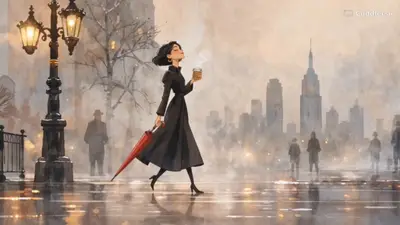
The Red Umbrella Guardian
Seedance 2.5